Front of House to Back of House Comms — Tommy Hilfiger
Adapting the Google Ventures Design Sprint format to get a global retail client from problem to storyboarded, build-ready concept in two days — a solution that went on to score 5/5 for desirability in store testing and reach pilot stage in London.
The Problem
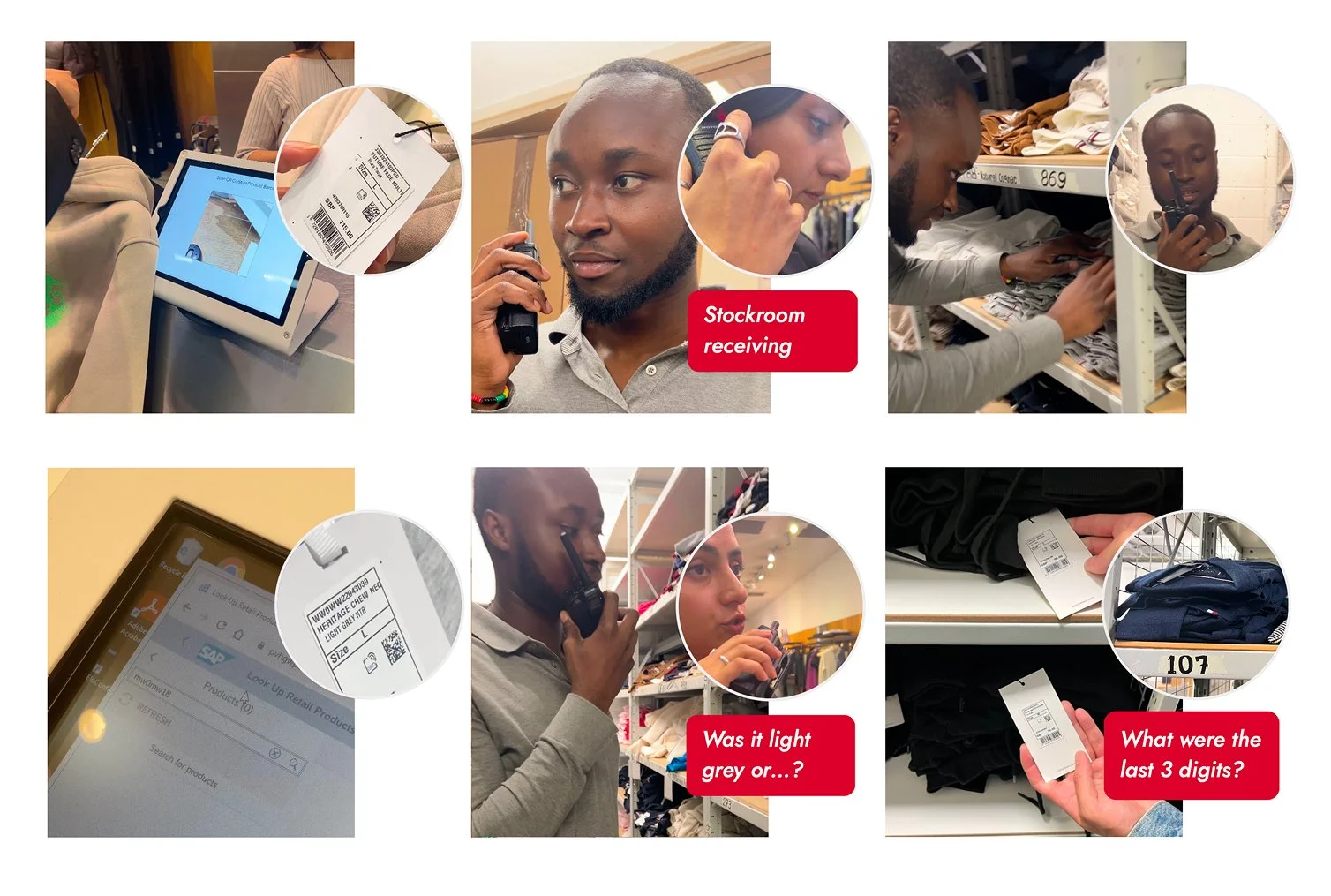
In Tommy Hilfiger stores, when a customer asks a Store Associate for an item that isn't on the shop floor, the process to check the stockroom runs entirely over radio. The Associate has to find a free device, verbally describe the product — colour, size, a string of code digits — over a noisy or unreliable connection, then wait up to ninety seconds for confirmation. Every step is a chance for something to go wrong: a misheard colour, a mistyped EAN, the wrong item brought out from the back. Each of those moments pulls the Associate's attention away from the customer standing in front of them.
The result was time spent on a non-sales task, and frustration on both ends of the radio. PVH brought this in as a problem worth solving properly. We ran it as a structured Innovation Sprint — a time-boxed, user-centred process designed to take a team from a defined problem to a tested prototype in four days — with an explicit sprint question: how can we ensure effective and reliable communication between Front of House and Back of House to reduce errors?
My Role
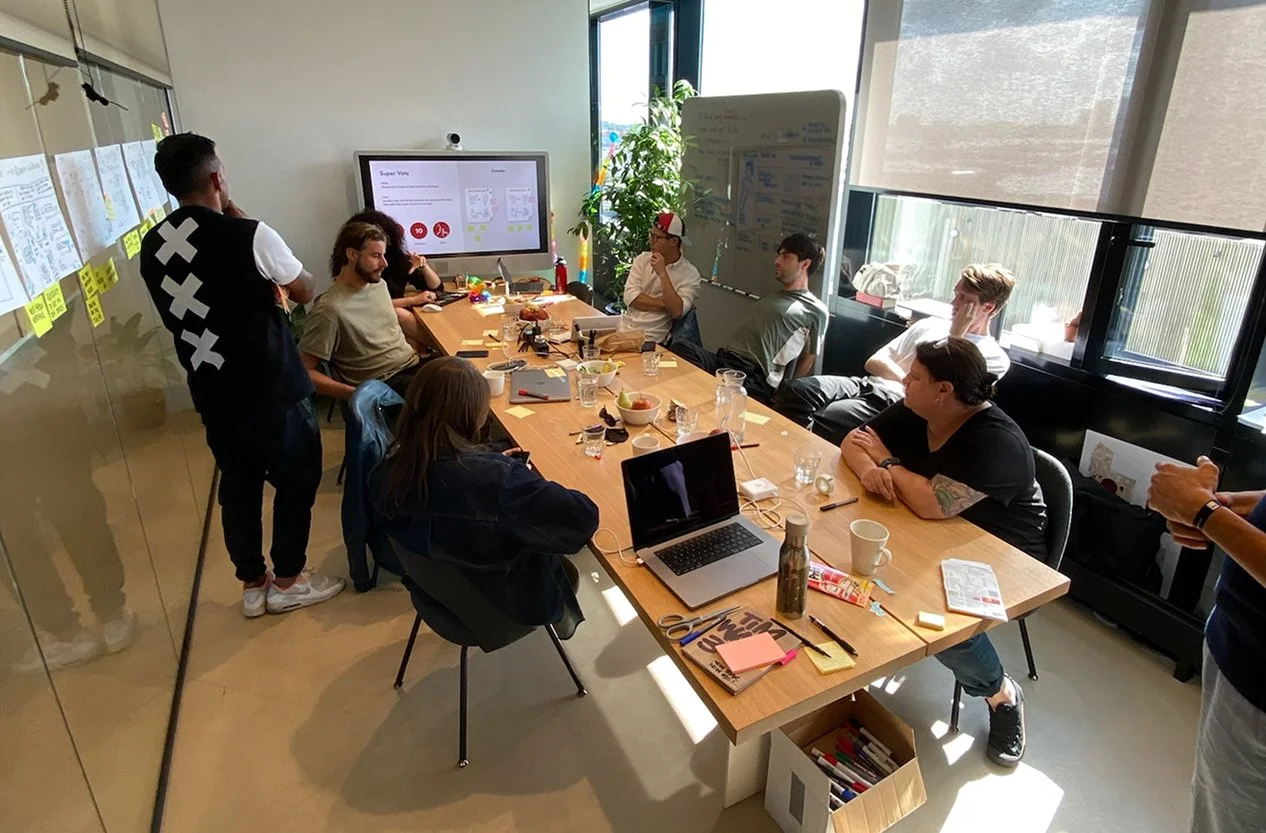
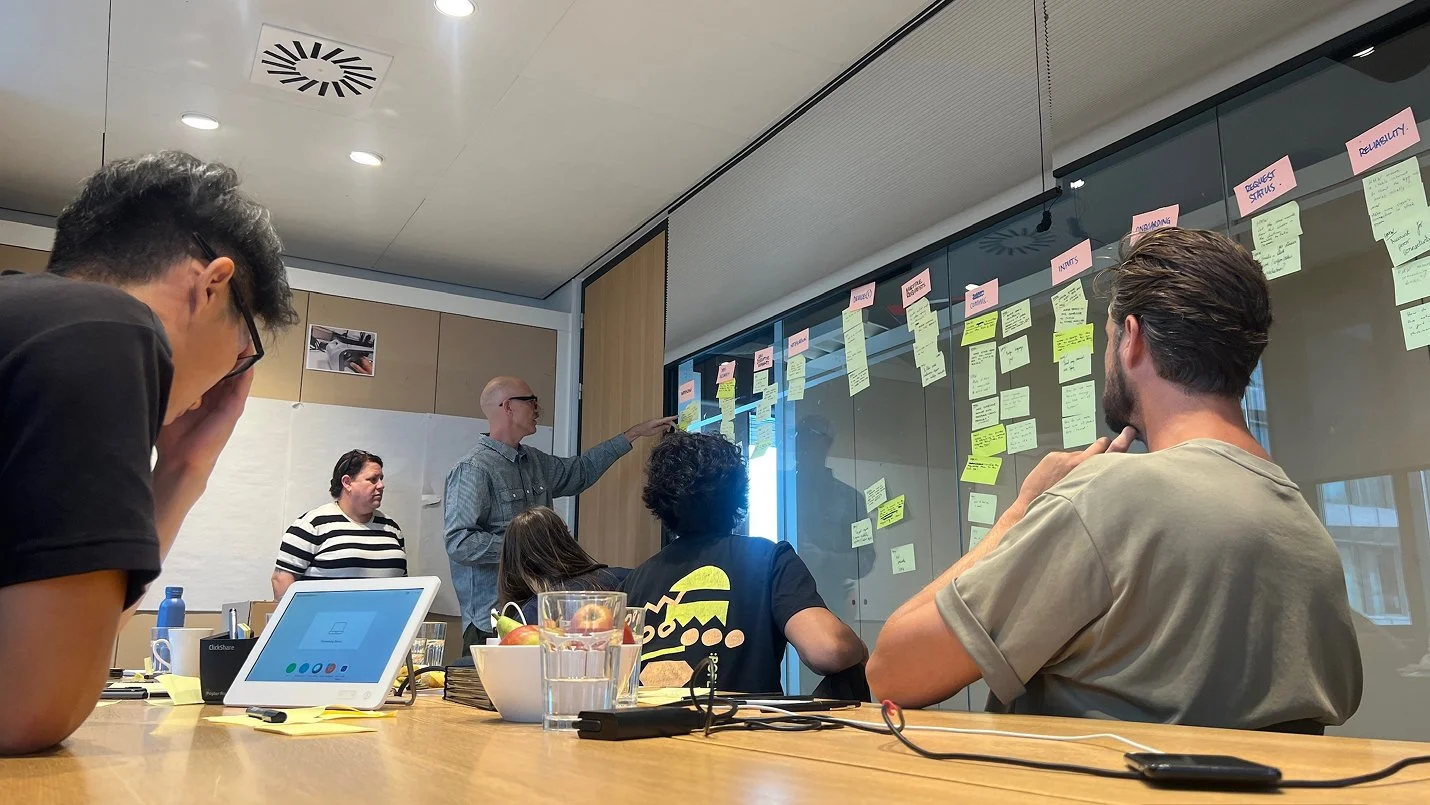
I designed and facilitated the client-facing portion of the sprint: Define the Challenge and Produce Solutions on day one, then Decide on the Solution and Storyboard on day two. The format was based on the Google Ventures Design Sprint, but deliberately adapted — a standard GV sprint runs the wider client team for five full days, and PVH's team couldn't commit to that. I restructured the content of both days to get a genuine, validated direction out of the client team in two days rather than five, condensing and re-sequencing the original exercises rather than simply cutting them down.
Designers and developers from Random Studio, led by Dilesh Lalloo, UX Lead, were in the room alongside the PVH team for both days. That meant the people building the prototype had lived through the problem definition and decision-making firsthand. Dilesh and the Random Studio team then took the agreed storyboard through days three and four, building and testing a working prototype directly with store staff.
The Approach
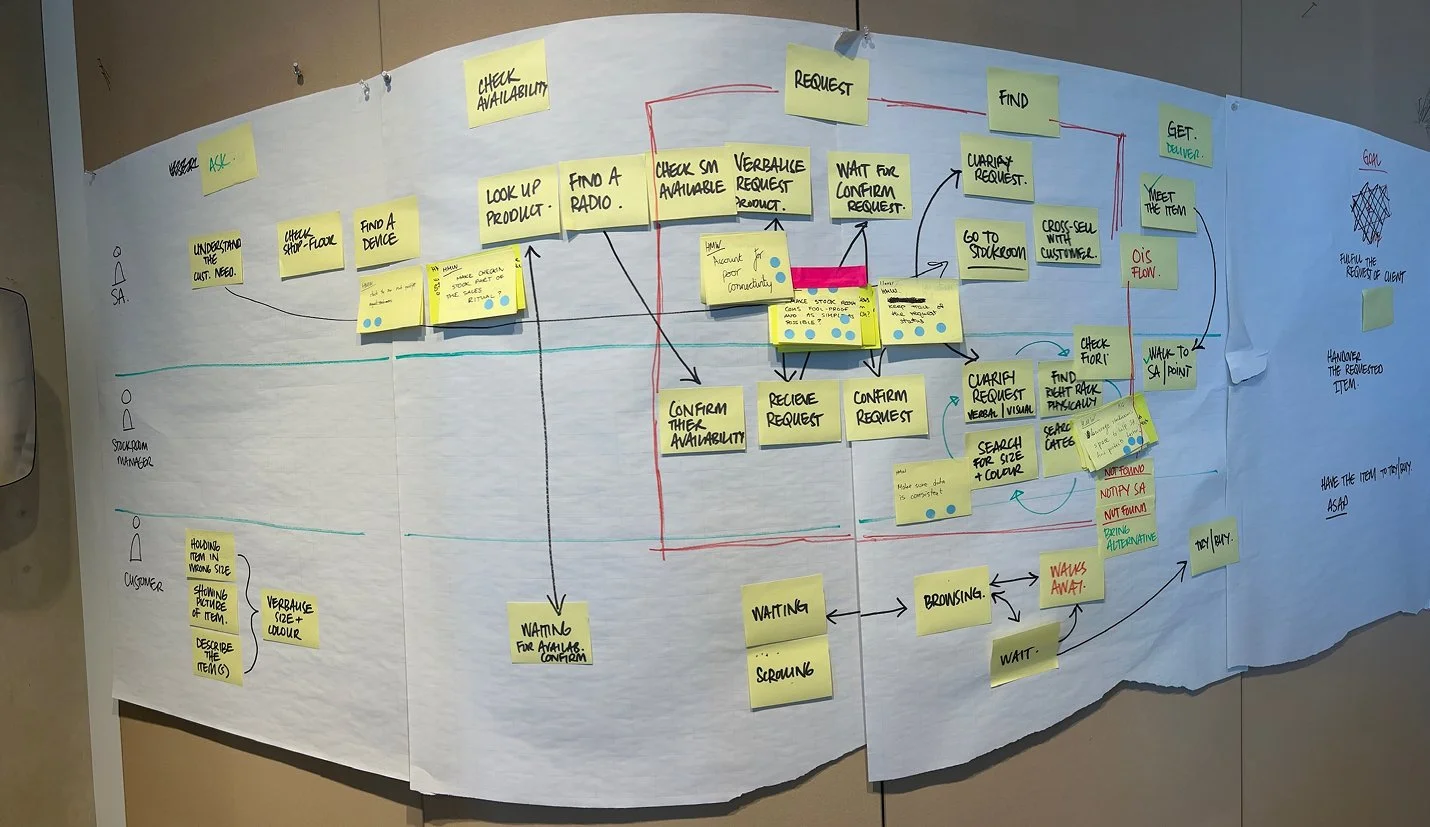
Day one opened with mapping the existing Front of House to Back of House journey end to end, across Store Associate, Stockroom Manager, and customer swimlanes. Rather than jumping straight to solutions, we charted every step from a customer request through to the item arriving on the shop floor. That surfaced where the process actually broke down: radio availability, verbal miscommunication, product details held only in someone's memory, no visual reference to work from. These became the genuine design prompts for the rest of the day. Each participant, PVH and Random Studio alike, then sketched solutions independently before the group converged — deliberately avoiding the anchoring effect of the first idea spoken aloud in the room.
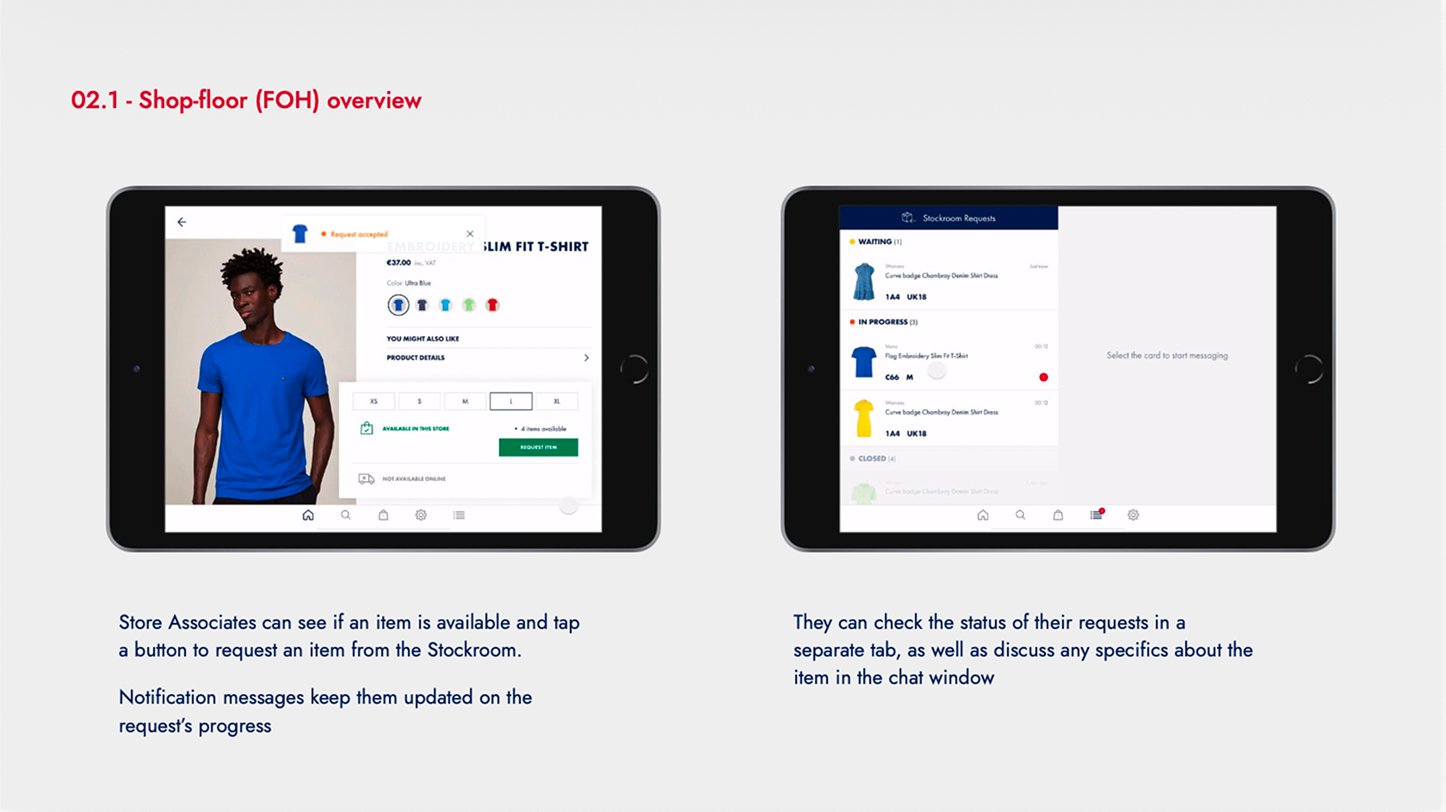
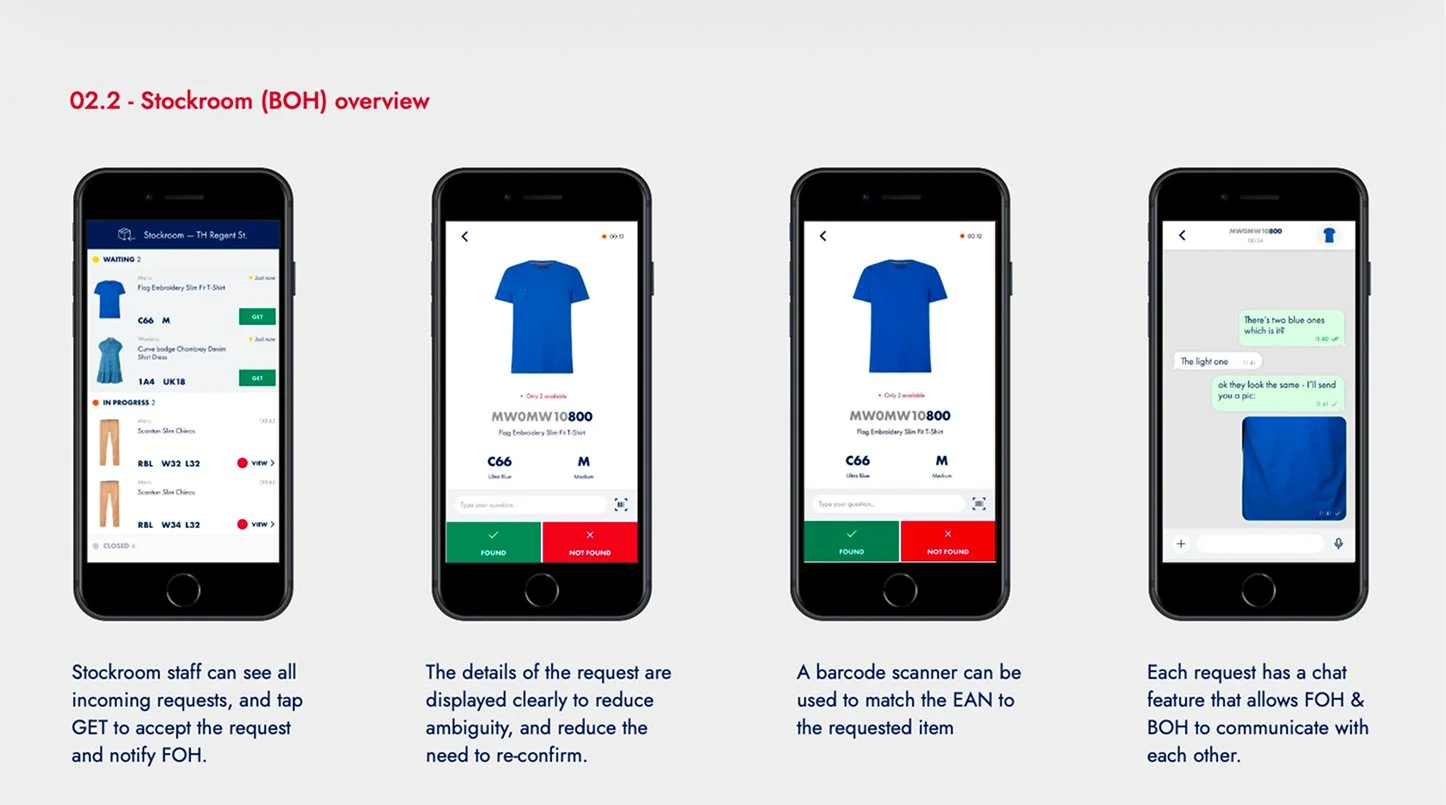
Day two moved from a wide set of sketches to a single, build-ready concept. I facilitated the group through selecting and combining the strongest elements, then immediately into storyboarding — a sequence of paper screens showing the full journey for both sides, frame by frame. This forced the team, including the developers who'd be prototyping next, to agree on the actual flow before any digital work began. By the end of day two, the agreed concept was a lightweight web-based system: Associates request an item from a product page on their device, and stockroom staff receive the request as a structured, visual card with full product detail — no radio needed for the handoff.
The Outcome
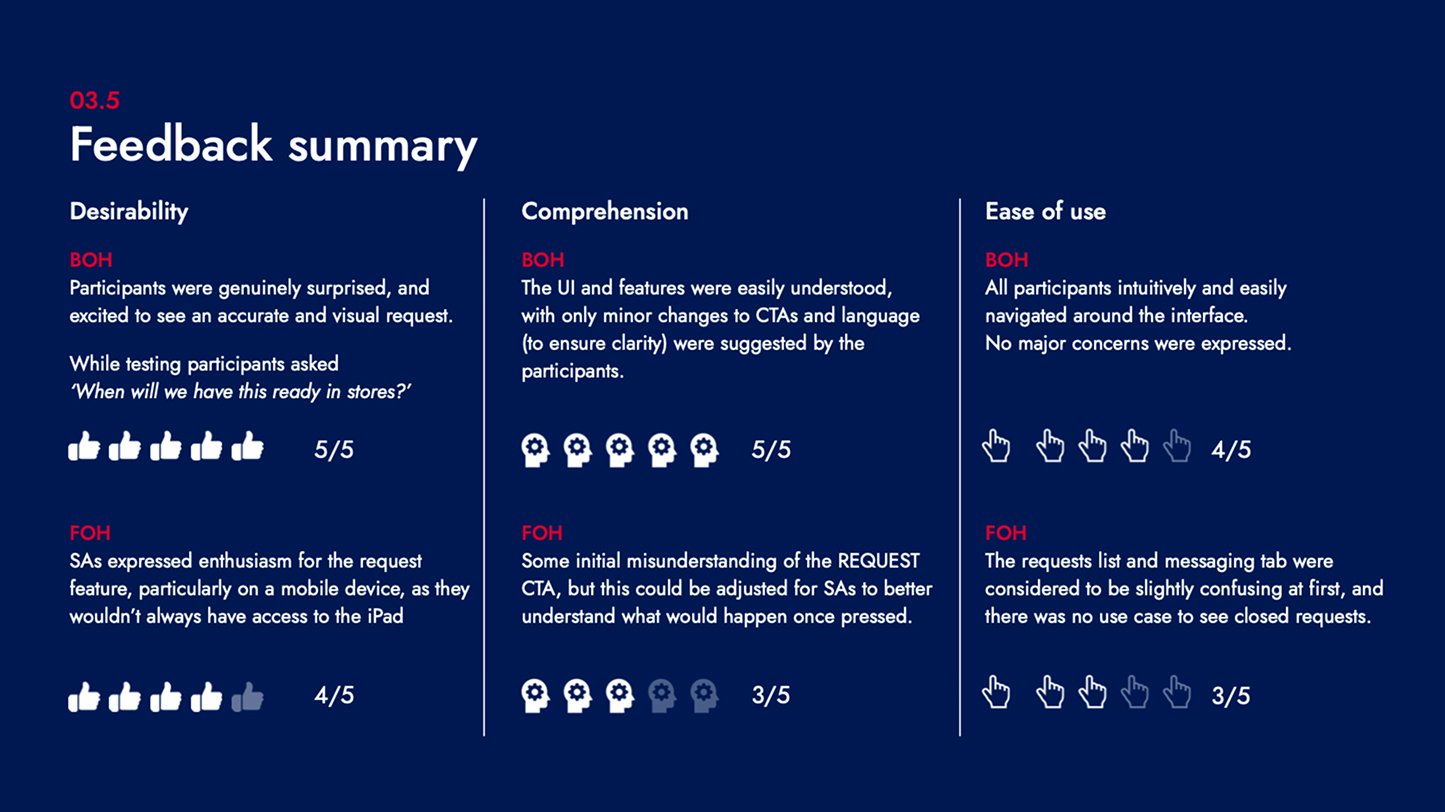
The storyboard handed to Random Studio became a working prototype tested with six users across two London stores, scoring 5/5 for desirability and comprehension. Participants asked when they could have it in-store, with one Stockroom Manager estimating savings of two to three minutes per request across a hundred requests a day. Being able to see exactly what the other person meant, rather than guessing from a description over a radio, was described as a major advantage. The solution went forward to a pilot in two London stores.